A Hallucinated Country: High-Taxed and Chained
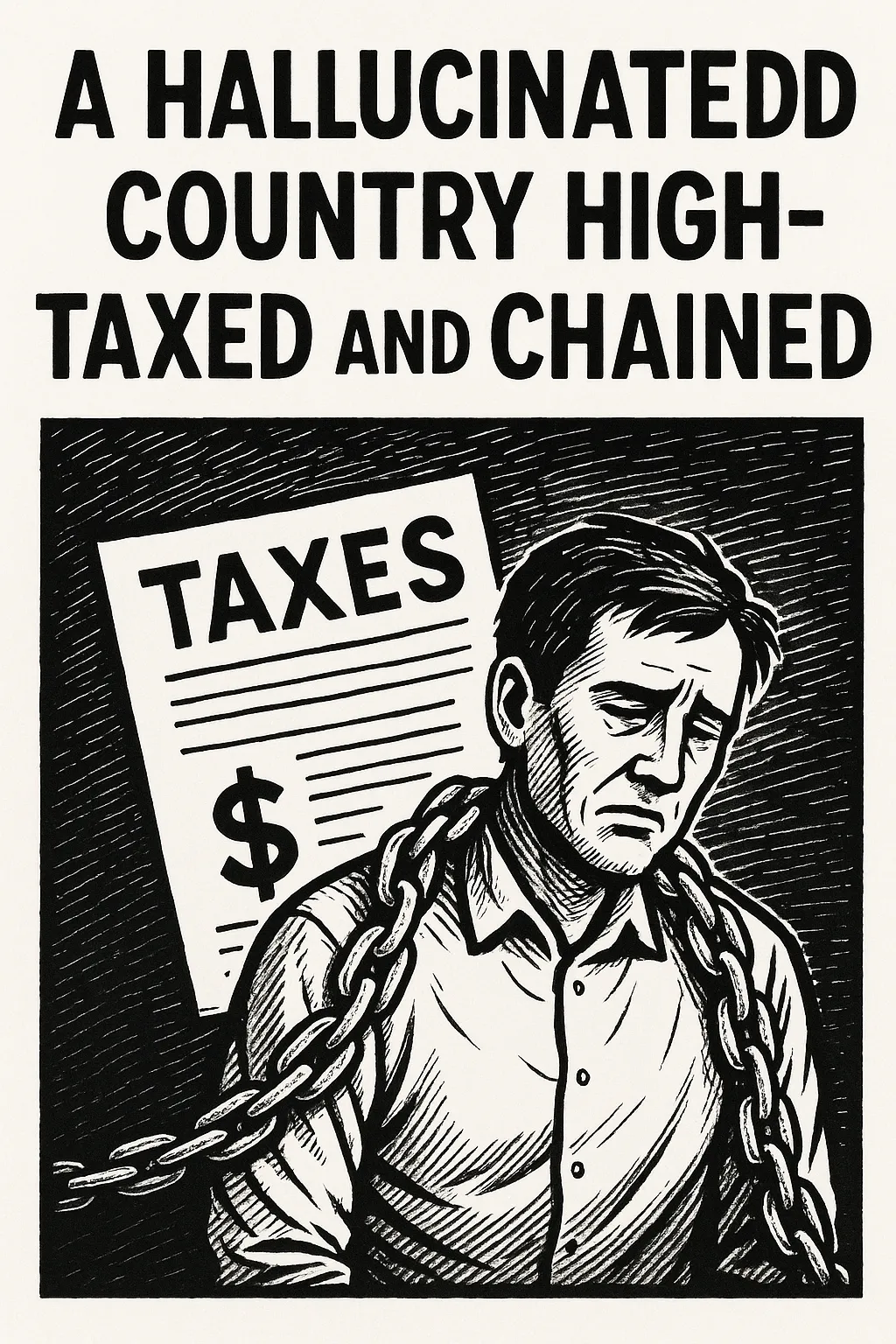
When taxation becomes illusionary freedom how modern societies mistake control for care, and prosperity for permission.
🧠 1. The Hallucination of Freedom
Imagine a country where everyone believes they’re free — but every choice is quietly priced.
Where you can speak your mind, but the platform you use profits from your data.
Where you can build your dream, but half of it belongs to the state before it’s even born.
This is not dystopia; it’s the daily reality of many modern nations — a hallucinated country.
Citizens are told they’re living in democracy, yet their income is dissected, their savings monitored, and their creativity drained through policies that preach fairness but practice control.
Freedom becomes a marketing slogan. Prosperity — a subscription you renew each tax season.
💰 2. The Invisible Chains of High Taxation
Taxation was once a noble concept — a contribution for the common good.
But when taxes grow heavier than the nation’s soul, they stop building societies and start feeding systems.
Citizens now pay taxes on everything:
- On their income, their savings, their food, their death.
- On their car, their fuel, their dreams.
And yet — hospitals crumble, infrastructures age, and wages stagnate.
The paradox? The higher the taxes, the smaller the people feel.
What once was “social contribution” has morphed into financial containment.
People are working not to live — but to maintain the illusion that they’re part of something fair.
⛓️ 3. Chains Disguised as Help
Governments today are experts in emotional manipulation.
They sell obedience as safety, compliance as progress.
Citizens are told that without taxes, the system would collapse — yet somehow, despite record collections, debt rises and poverty lingers.
Welfare becomes a leash.
Relief checks become pacifiers.
And dependency becomes the new national identity.
When citizens are too tired to question and too taxed to rebel, the government doesn’t need bars — it just needs forms.
🔄 4. The Cycle of Illusion
The cycle looks like this:
- Raise taxes → justify it as “for the people.”
- Fund inefficiency → blame “market instability.”
- Inflate debt → issue new regulations to control spending.
- Repeat → until freedom becomes an antique word on a history page.
The hallucination works because people are distracted — entertained by the very system that exploits them.
They scroll through outrage, laugh at politics, and sign digital petitions while paying 40% of their paycheck to a machine that thanks them with silence.
🔓 5. Breaking the Illusion
Every hallucination ends when people wake up.
A nation can break its chains, not by burning its institutions, but by redefining its values:
- Transparency over rhetoric. Citizens must demand to know where their money goes — not just why it’s taken.
- Simplicity over bureaucracy. The more complex the tax system, the more corruption hides within it.
- Creation over consumption. Encourage entrepreneurship, innovation, and education that breeds independence — not compliance.
- Self-governance over dependency. Real democracy starts when people take personal accountability rather than waiting for policy miracles.
🌍 6. A Country Awake
A hallucinated country can recover.
It starts when its citizens stop being consumers of comfort and become architects of change.
When they stop asking, “What will the government do for us?” and start asking, “What will we stop allowing it to do to us?”
The chains are not metal — they are mental.
They’re made of paperwork, debt, and disbelief.
The first act of rebellion is not violence — it’s clarity.
✍️ Final Thought
A nation that taxes its dreams faster than it rewards its courage will always be rich in bureaucracy and poor in spirit.
The antidote to hallucination isn’t anger — it’s awakening.
Until citizens question the price of their own freedom, they will keep paying for illusions they never asked for.